-
01Introduction to the Republic of Korea
-
02Multicultural Families and Foreigner Support Services
-
03Residence and Naturalization
-
04Korean Culture and Life
-
05Pregnancy and Childbirth
-
06Education of Children
-
07Health and Healthcare
-
08Social Security System
-
09Employment and Labor
-
10References
-
Chapter Introduction Video
-
FAQ
-
Status of family centers
-
Current Status of Danuri Helpline
-
Migrant Background Youth Support Foundation
-
Current Status of Saeil Center (New Job Center for Women)
-
Immigration Offices
-
Major Tourist Destinations by Region
-
Contact Numbers for Key Foreign Embassies and Consulates in Korea
-
Guide to Personal Information Protection
-


Danuri Call Center : 1577-1366
가족상담전화 : 1644-6621

21F, 173, Toegye-ro, Jung-gu, Seoul (Chungmuro 3-ga, Namsan Square Building)
Copyright ⓒ KOREA INSTITUTE FOR HEALTHY FAMILY. All Rights Reserved
Transportation in Korea
- Home
- Korean Culture and Life
- Transportation in Korea
Transportation in Korea
01Buses
There are city buses, distance buses, and express buses. To use distance buses and express buses, you will need to buy tickets in advance. Check the time of departure and the destination before getting on a bus.
(1)City Buses
Using City Buses
- Use a transportation card or pay cash when you ride a bus.
- You can buy a transportation card at subway stations or stores around bus stops. Traffic cards can be recharged in cash amounts in units of KRW 1,000, ranging from KRW 1,000 to KRW 50,000.
- At present, credit cards can also serve the function of a deferred payment transportation card.
- AH Fares are discounted if you use the transportation card. A discounted transfer fare will apply when you transfer to a bus or the subway.
| Type | Transportation Card | Cash |
|---|---|---|
| General bus | 1,500 won | 1,500 won |
| Wide area bus | 3,000 won | 3,000 won |
| Town bus | 1,200 won | 1,200 won |
- The table above reflects fares in Seoul; fares may vary by region. Please refer to the traffic information websites of your local city and borough office.
-
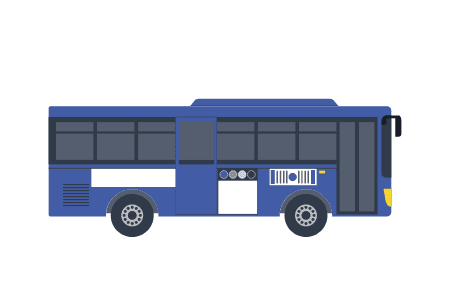
- Ganseon Bus (Rapid inter-regional travel):
- Connects the suburban areas and the Seoul downtown areas by traveling in the central bus lanes.
-
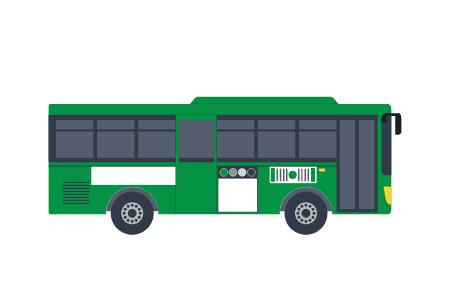
- Jiseon Bus (Linking main routes):
- Connects major subway stations and bus terminals in the Seoul downtown areas.
-
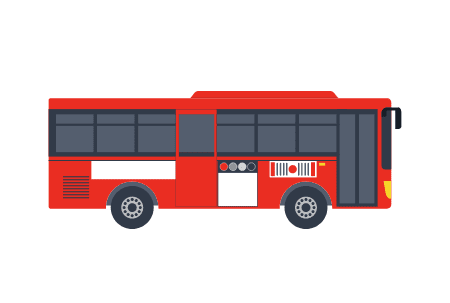
- Gwangyeok Bus (Rapid transportation between metropolitan areas):
- Connects the Seoul downtown areas and neighboring cities for commuters.
-
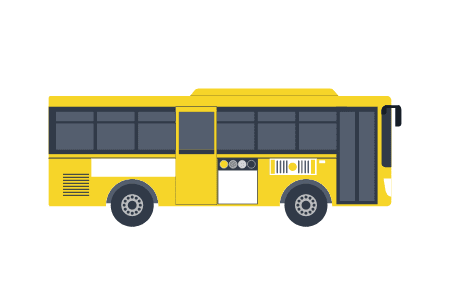
- Sunhwan Bus (Circular line transportation):
- Travels the Seoul downtown areas and stops at major railway stations, commercial districts, tourist destinations and shopping destinations
-
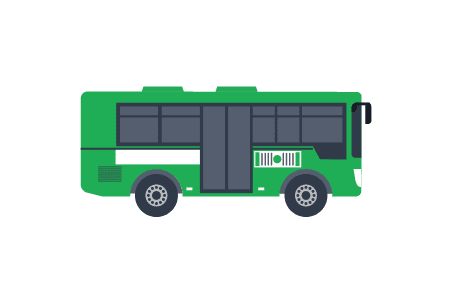
- Town shuttle bus:
- Small bus that travels between the local railroad station, red bus transfer stations, apartment complex, and other key areas.
-
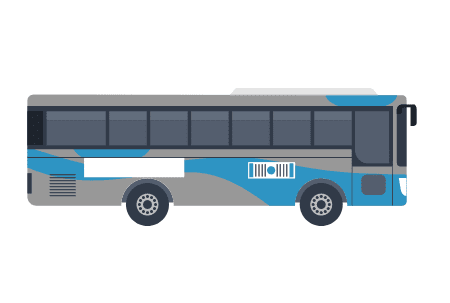
- M Bus (red express buses):
- To solve the issue of traffic congestion in the Seoul Metropolitan Area and provide a better experience for commuters, M Buses stop only at four stops within a 5km range of the place of departure and the place of destination.
The transfer system is applied to all areas where subways and transit vehicles are operated. The discount program is applied when transferring between buses, or from a bus to a subway or vice versa. Fare payments made in cash are not eligible for transfer discounts. If you use a transportation card, you will be able to take advantage of the transfer system, and will not be charged any extra fare within 10 km of the total distance, when you transfer to other transportation vehicles, such as the bus or subway. However, you must pay an additional 100 won for every 5km over 10km. Discount fares differ by region.
To make the advantage of the transfer system applied, get on other means of transportation within 30 minutes after getting off (within 1 hour between 9 pm and 7 am of the next day).
(2)Intercity Buses and Express Buses
How to Use the Bus
- You can board the buses listed below at bus terminals to visit cities in other regions.
- Intercity buses will stop at several cities on a route and will involve a longer travel time than express buses.
- Express buses have a single destination, and consist of Economy, Excellent, and Premium Gold classes. The Excellent express bus is comfortable with extra wide spaces between seats. The Premium Gold express bus has large seating areas and tables, and TV monitors are equipped for all the seats so passengers can enjoy various contents including TV shows and movies. Prices for the Premium Gold are the highest and the Economy the lowest.
City Bus Terminals
To use inter-city buses or express buses, passengers should visit local bus terminals. For information about bus schedules and reserving a bus ticket, please visit the KOBUS website (www.kobus.co.kr) or the inter-city bus information and reservation service (txbus.t-money.co.kr).
| Bus Terminal | Contact | Bus Terminal | Contact |
|---|---|---|---|
| Seoul Express Bus Terminal Gyeongbu Line | 1688-4700 | West Daegu Express Bus Terminal | 1666-2600 |
| Dong Seoul Bus Terminal | 1688-5979 | Ulsan Express Bus Terminal | 1688-7797 |
| Central City Terminal Honam Line | 02-6282-0114 | Gangneung Express Bus Terminal | 033-641-3184 |
| Sangbong Intercity Bus Terminal | 02-323-5885 | Sokcho Express Bus Terminal | 033-631-3181 |
| Seoul Nambu Bus Terminal | 1688-0540 | Chuncheon Express Bus Terminal | 033-256-1571 |
| Suwon Bus Terminal | 1688-5455 | Cheongju Bus Terminal | 1688-4321 |
| Incheon Bus Terminal | 1666-7114 | Mokpo Bus Terminal | 1544-6886 |
| Ansan Bus Terminal | 1666-1837 | Jeonju Express Bus Terminal | 063-277-1572 |
| Uijeongbu Bus Terminal | 1688-0314 | Gwangju Bus Terminal | 062-360-8114 |
| Daejeon Bus Terminal | 1577-2259 | 9 Yeosu Intercity Bus Terminal | 1666-6977 |
| Cheonan Bus Terminal | 041-640-6400 | Busan Bus Terminal | 1577-9956 |
| Dongdaegu Bus Terminal | 1666-3700 | Masan Intercity Bus Terminal | 1688-3110 |
02Subways
There are subways operating in the capital area, Busan, Daegu, Gwangju, Daejeon, and Seoul. In capital area, there are currently a total of 9 subway lines, Incheon Line 1~2, Bundang Line, Sinbundang Line, Gyeongui-Jungang Line, and the Airpot Railroad, etc. in operation. Seoul subway lines are differentiated by color. All stations, including stations located at the farthest outskirts of Seoul, stations in satellite cities, and many transfer stations that intersect different lines, are marked on subway maps with symbols.
Normally, subways run at 2-3 minute intervals during rush hour in the mornings and evenings, and 4-6 minute intervals at other times.
(1)Subway Tickets and Fares
| Classification | Transportation Card (rechargeable) | Transportation Card (one-time) |
|---|---|---|
| Adult | KRW 1,550 | Transportation card fare + KRW 100 |
| Youth | KRW 900 | Regular one-time fare |
| Child | KRW 550 | Same as Transportation card |
- The table reflects fares charged for traveling less than 10km within the capital area; use and fees may vary by region. Please refer to the website of your local subway operation institution for more information.
(2)How to Use the Subway
- 1,550 KRW for 1 trip (1-way ticket for a distance of less than 10 km), additional fee applied depending on the distance
- Subway trains run every 2-10 minutes and operate from 5:30 a.m. to midnight.
- There are several subway lines, and the map is easily visible at various locations in the subway station. You can also obtain a pocket-sized map at the Korea Subway Information Center or the subway office.
- Transfer fares are applied in all subway areas if you pay using a transportation card. Discounts vary depending on the region of travel.
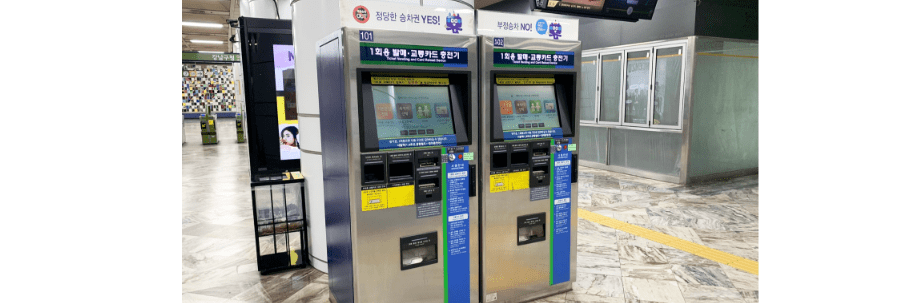
- Fares may be paid with cash, but cash fares are not eligible for transfer discounts. For this reason, it is highly recommended that you purchase a transportation card. You can use cash to add money to your card balance at the bus station ticket office or by using the transportation card recharger machine at any subway station.
- 1Select one of the following: transportation card prepayment, one time use ticket issuance, or free ticket issuance
- 2Select the destination to calculate the fare.
- 3Press the number of tickets desired.
- 4Insert your money.
- To buy a one-time ticket, you must pay both the fare and a small deposit for the ticket (refundable once you reach your destination). You can get your deposit back by using the deposit return machine after getting off the train. The deposit amount and one-time ticket may differ by region.
- < Automatic Ticket Issuance Machine >
Major subway and train stations including Seoul, Busan, Daegu, Incheon, Gwangju, Daejeon, etc. are equipped with nursing rooms, in names such as ‘Baby love room,’ or ‘Happy room for babies and mothers.’
- For details, please refer to websites for regional subway stations and korail.
(3)Subway Map
For information on the first trains, last trains, stations, operation schedule and the shortest routes, please visit the websites of the local subway operators mentioned in the following section.
-
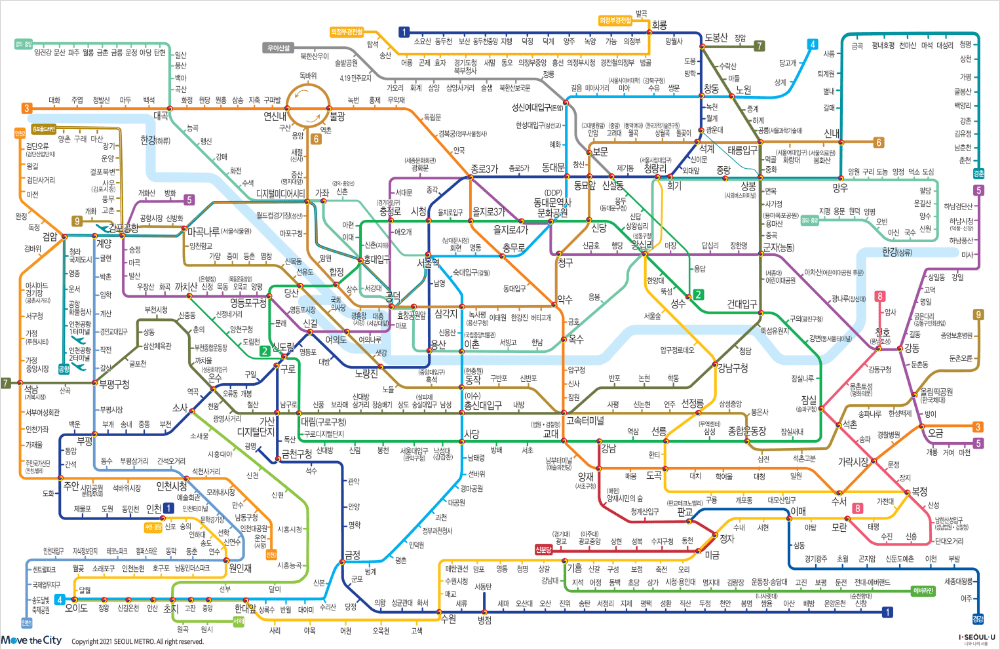
- Seoul
- Seoul Metro, www.seoulmetro.co.kr
Metro 9, www.metro9.co.kr
Korea Railroad, www.korail.com
Neo Trans, www.shinbundang.co.kr
Airport Railroad, www.arex.or.kr
-
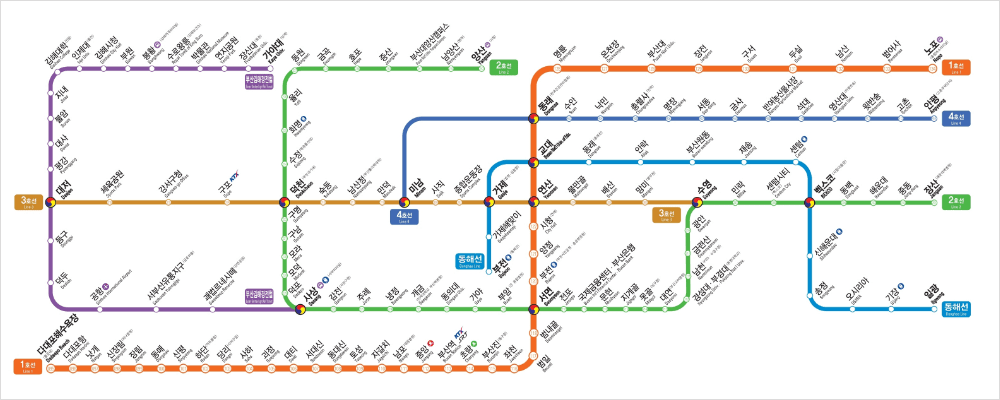
- Busan
- Busan Transportation Corporation, www.humetro.busan.kr
-
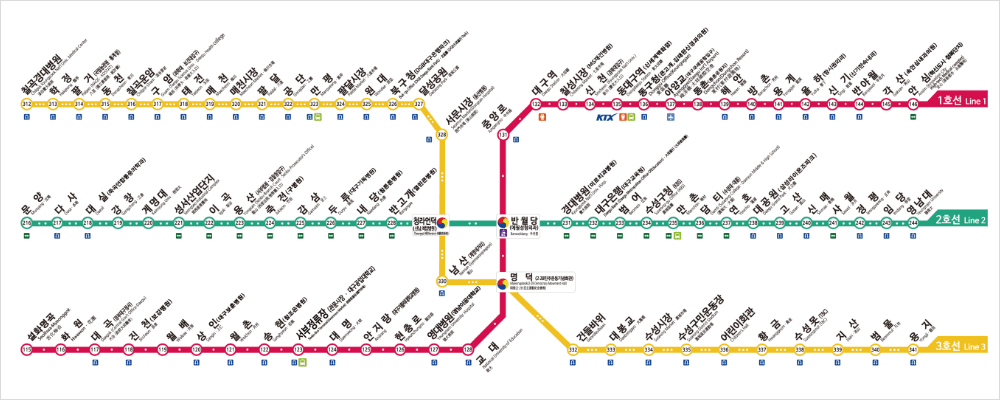
- Daegu
- Daegu Metropolitan Transit Corporation, www.dtro.or.kr
-
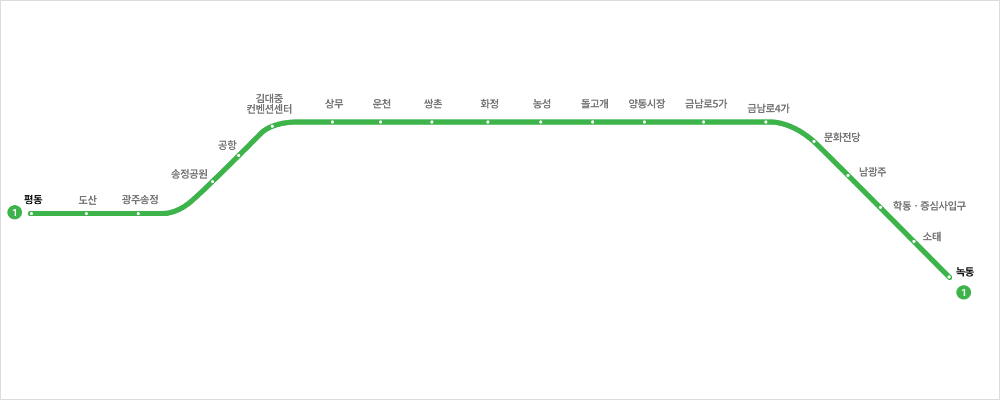
- Gwangju
- Gwangju Metropolitan Rapid Transit Corporation, www.grtc.co.kr
-
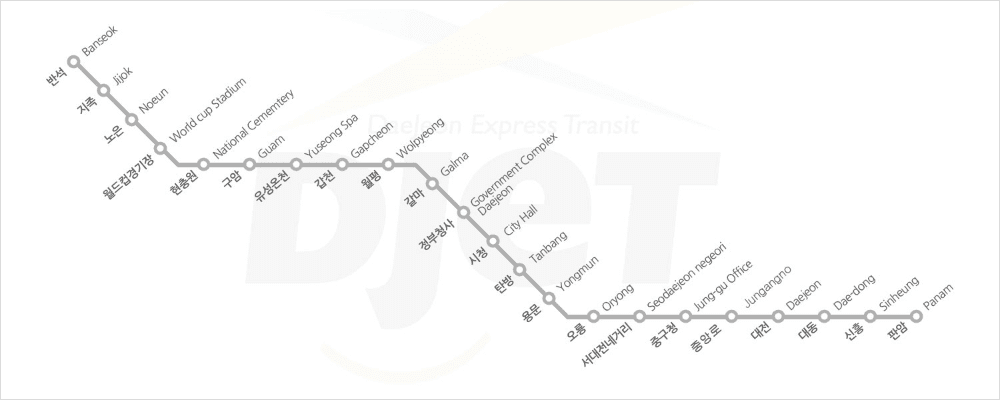
- Daejeon
- Daejeon Metropolitan Express Transit Corporation, www.djtc.kr
03Taxis
Taxis are available 24 hours. They can be easily distinguished from regular cars by the signs on top of the car roof. You can get a taxi at a taxi stand, or hail one on the street by waving your hand. An additional fee (usually 1,000 won) is charged on top of the regular fare if you use a call-taxi. There are various call-taxi companies that operate in each region in Korea.
(1)Regular Taxis
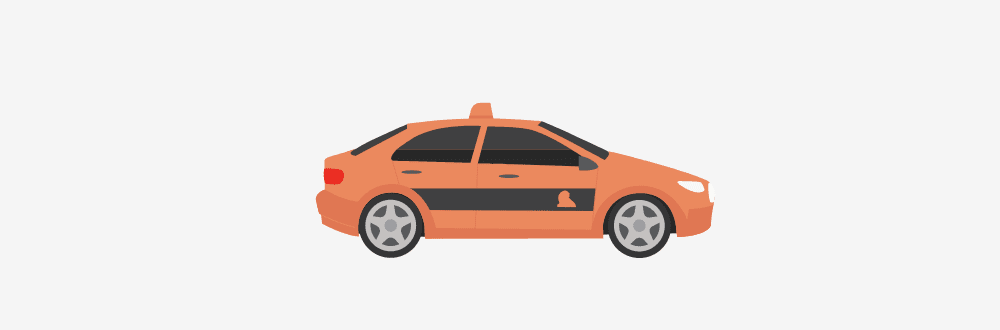
A regular taxi can carry a maximum of 3-4 passengers. Rates are calculated by a taximeter that is visible on the console in the front of the taxi. The base rate differs by region, but it is usually KRW 4,800 in Seoul for initial 1.6km. An additional 20% charge applies for late-night taxi rides (00:00-04:00).
(As of July 2025)
(2)Deluxe Taxis
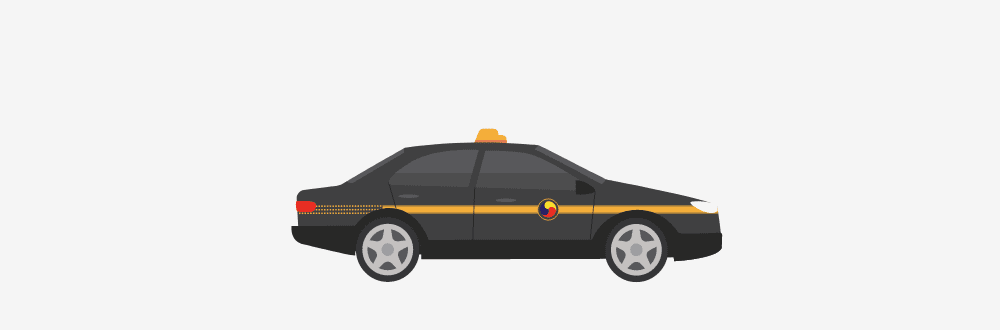
These taxis are luxury passenger vehicles with an engine displacement of 2,000 cc or more. They are mostly black and operate mainly in the Seoul metropolitan area. The base fare is KRW 7,000 (up to 3 km in Seoul), which is much more expensive than a regular taxi.
(3)Van Taxis
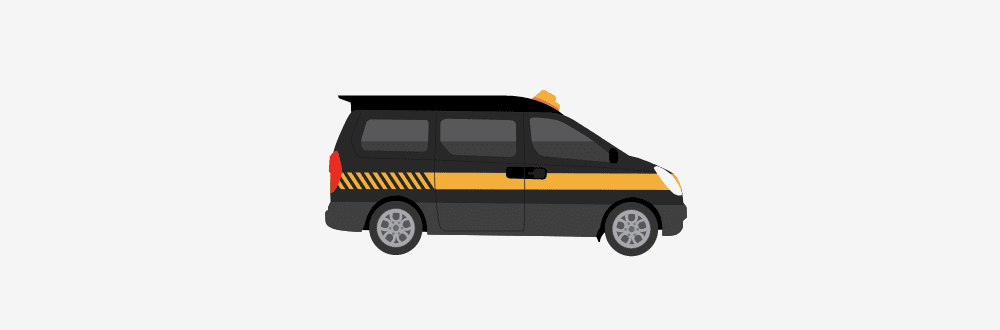
These taxis are big enough to carry up to 9 people and can be very convenient when you have a lot of baggage. Every van is equipped with a radio, allowing you to call for pick up. Although the base rate is KRW 7,000, similar to that of a luxury taxi, the fee may be negotiated between the driver and the passenger.
04Passenger Vehicles
Passenger vehicles are cars owned by individual households.
There are diverse types of passenger vehicles, ranging from small cars to large cars. The prices range from millions of won to tens of millions of won.
How to Get a Driver's License
Procedure to obtain a driver’s license is as follows:
- 1Transportation Safety Education: The Transportation Safety Education Center of the driver's license examin ation center or locations designated as transportation safety education organizations (institutions) operate the transportation safety education program.
- 2Physical checkup (fee is charged separately)
- 3Application for Written Test
| Required documents | Service charge |
|---|---|
| Application form (Three passport-size color photos taken within the past 6 months), identification card (acceptable ID cards) | KRW 10,000 (KRW 8,000 for motorcycles) |
- 4Written test (※transportation safety education must be completed before submitting an application for the written test): the test is a total of 40 questions.
- Supported languages: Korean plus three foreign languages (English, Chinese, Vietnamese)
- 5Application for Practical l Test: Candidates who have passed the written test or candidates who have previously failed the practical test are qualified to take the exam.
| Required documents | Service charge |
|---|---|
| Application, resident registration card (or other acceptable ID cards)
|
|
- 6⑥ Practical test: During the test, candidates must complete various driving courses within the premises of the driver's license examination center.
- 7Issuance of a learner’s permit: When applying for Class 1 Regular or Class 2 Regular, a learner's permit is issued to the candidates who have successfully passed the practical test, so that they can practice driving on the road.
- 8Application for a field driving test: After completing the field driving practice on the road, a learner’s permit holder can submit an application for a field driving test.
- 9Field driving test (final test): Candidates take the field driving test at the test center on the test date that is determined upon submitting their application for the field driving test.
- 10Issuance of a driver’s license: If a candidate passes the final field driving test, he/she is issued a driver’s license (Class 1 Large, Class 1 Regular, Class 1 Special, Class 2 Regular, Class 2 Small, Class 2 Motorcycle).
Exchanging a foreign license for a Korean license
A holder of a driver's license issued by an authoritative institution abroad may exchange the license for a Korean driver’s license. Once its authenticity is confirmed through the submitted documents, including embassy confirmation, the holder is required to take an aptitude test or an aptitude test plus a screening test to complete the exchange. The validity of the foreign license is recognized only for a full license whose expiration date has not yet passed. Temporary licenses, learner's permits, provisional licenses, probationary licenses, driving permits, and driving certificates may not be exchanged for a Korean license.
- Location: Driver's license test centers nationwide. Foreign license must be issued from one of the “recognized nations for Korean licenses.”
- List of recognized nations announced by the National Police Agency on November 22, 2023
- What is a “recognized nation” for a Korean driver’s license?
A “recognized nation” is a nation that exchanges a Korean license with a local license without additional tests. Regions with independent licensing system, such as Hong Kong, Taiwan, and Guam, are included in this category of nations.
- Required documents
| Classification | Recognized Nation | Unrecognized Nation |
|---|---|---|
| Foreigners, Overseas citizens |
|
|
| Classification | Recognized Nation | Unrecognized Nation |
|---|---|---|
| Korean natives, permanent residents |
|
|
- Embassy confirmation of the license or an Apostille certification: Certificate issued in Korean or English from the respective nation's embassy in Korea or the Korean embassy in the respective nation to verify the authenticity of the foreign license, or a certificate in Korean or English from a Apostille country (country of origin)
- If the dates of issuance and expiration do not appear on the driver's license certification, the administrative institution that issued the license must submit documents that can verify the date of issuance and expiration date, such as "certificate of driving experience.”
- Certificate of Entry and Passport: The entry/exit stamps on the certificate of entry/exit and the passport must confirm that the applicant has resided in the license-issuing country for 90 days or more, and that the applicant was residing there on the date of issuance of the foreign license.
- If the passport or certificate of entry/exit cannot be used to verify that the period of stay exceeded 90 days, a certificate of attendance (employment), tax invoices, etc., can be used to prove the period of stay. Verification based on documents under another person’s name will not be accepted.
- Short-term residents of 90 days or less who have not registered as resident aliens cannot exchange their foreign licenses for domestic licenses (excluding those who are exempt from alien registration).
- A “native” refers to a person who is registered as a resident under Article 6 of the Residents Registration Law.
- License issued at the exchange
- Others: No proxy receipt (Regions with independent license systems such as Hong Kong, Taiwan, and Guam are included in this category of nations.)
- Note: If the Korean license has been revoked in the past, the applicant must receive 6 hours of traffic safety education (if the license was revoked due to the expired date for an aptitude test, the license holder is exempted from the safety education).
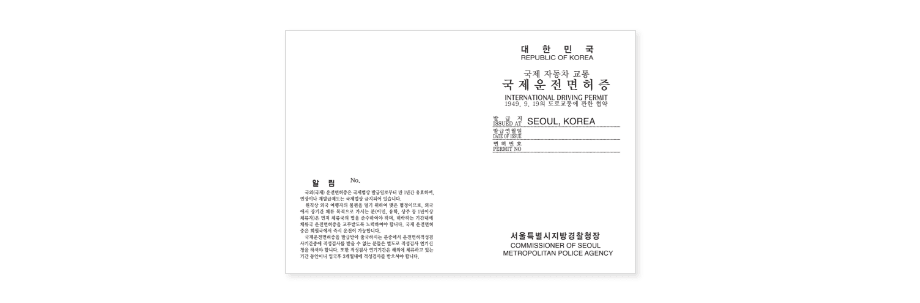
International licenses
| Category | Contents |
|---|---|
| Requirements |
|
| Location | Driver's license test centers and police stations nationwide |
| Expiration date | 1 year from the date of issuance |
| Fee | KRW 9,000 |
| Caution |
|
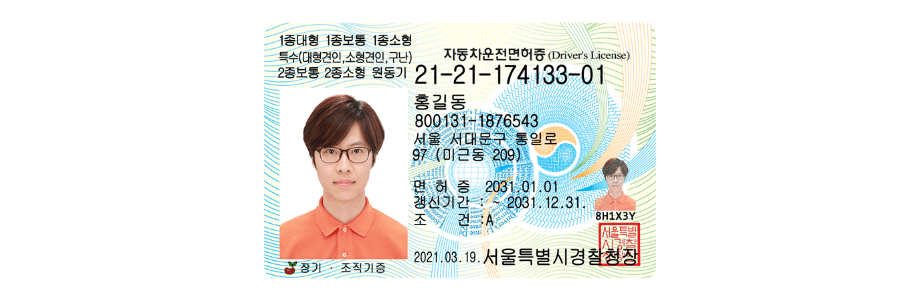
IC driver’s license
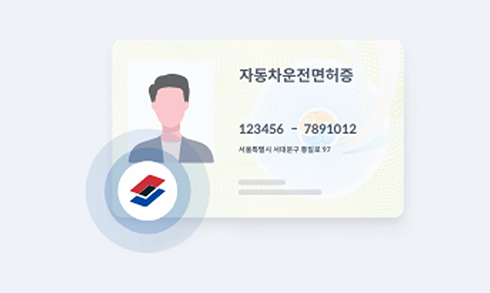
- An actual driver’s license equipped with the function of issuing a mobile driver’s license.
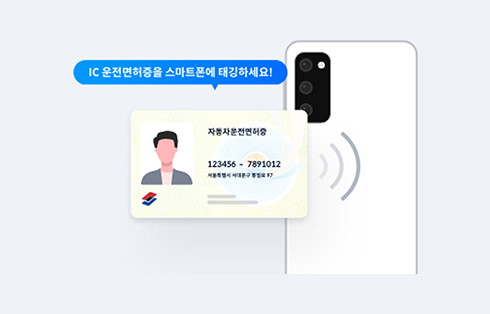
- It can be discerned from the standard driver’s license with the icon of a mobile ID at the bottom of license photo.
| Item | Content |
|---|---|
| Application venue | |
| Requirements | |
| Fees | KRW 21,000 when applying for an aptitude test / KRW 15,000 when applying for a renewal, reissue, or new issuance |
| Other | |
Mobile driver’s license
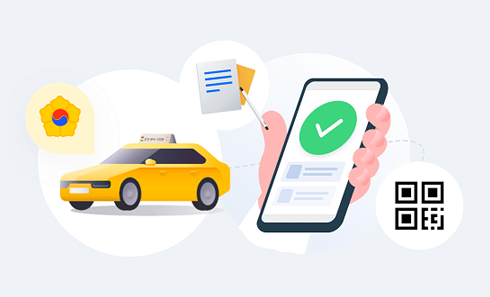
- A method of getting a mobile driver’s license without changing the actual driver’s license.
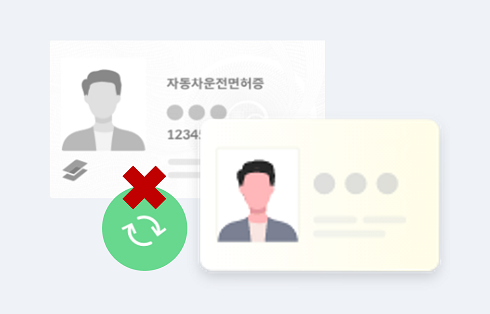
- Apply by visiting a driver’s license test center and get a mobile driver’s license.
| Item | Content |
|---|---|
| Application Venue | |
| Requirements | |
| Fees | KRW 1,000
|
| Other | |
05Trains
Trains are very fast and run between almost all major cities in Korea. They also are well connected to buses and subways, enabling you to reach your final destination with ease. Korean trains include KTX (Korea Train Express), SRT(Super Rapid Train), Saemaeul, and Mugunghwa.
(1) How to purchase tickets
You can make a reservation for train tickets online (www.letskorail.com) or using an app called Korail Talk. You can also purchase tickets at a ticket office or via an automatic ticket vending machine at the train station. Reservations can be made online 24 hours a day anywhere from 1 month before the train's departure. When boarding a train, a passenger must have a designated ticket (SRT can be booked at etk.srail.co.kr).
(2)About KTX and SRT
KTX and SRT are safe, comfortable, and environmentally-friendly modes of transportation that allows you to travel anywhere in Korea within 2 hours. They have two types of seats: regular and special. The trains have convenient facilities including bathrooms, nursing rooms, and snack vending machines along with Wi-Fi and power outlets.
- KTX routes (Gyeongbu Line, Honam Line, Gyeongjeon Line, Jeolla Line, and Gangneung Line) can be checked from the Train Station Info menu of the Let’s Korail homepage (www.letskorail.com) or from downloading the application 'Korail Talk.’
- SRT routes (Gyeongbu Line and Honam Line) can be checked from the 'User Guide>Train Station Information>Route Information’ at 'SR (etk.srail.co.kr)' homepage.
06Airlines
Traveling by air saves time when traveling long distances, but is more expensive compared to other forms of transportation. Some of the major domestic routes in Korea include Seoul -Busan, Seoul -Jeju, Seoul-Ulsan, Seoul- Gwangju, Seoul-Sacheon, and Seoul-Yeosu. Tickets can be purchased at airline offices or travel agencies by phone or the internet.
(1)International Airports
| Name of Airport | Contact | Website |
|---|---|---|
| Incheon International Airport | 1577-2600 | www.airport.kr |
| Gimpo International Airport | 1661-2626 (Korea Airports Corporation) | www.airport.co.kr/gimpo/index.do |
| Gimhae International Airport | www.airport.co.kr/gimhae/index.do | |
| Daegu International Airport | www.airport.co.kr/daegu/index.do | |
| Muan International Airport | www.airport.co.kr/muan/index.do | |
| Yangyang International Airport | www.airport.co.kr/yangyang/index.do | |
| Jeju International Airport | www.airport.co.kr/jeju/index.do | |
| Cheongju International Airport | www.airport.co.kr/cheongju/index.do |
(2)Domestic Airports
| Name of Airport | Contact | Website |
|---|---|---|
| Gunsan Airport | 1661-2626 (Korea Airports Corporation) | www.airport.co.kr/gunsan/index.do |
| Gwangju Airport | www.airport.co.kr/gwangju/index.do | |
| Sacheon Airport | www.airport.co.kr/sacheon/index.do | |
| Yeosu Airport | www.airport.co.kr/yeosu/index.do | |
| Ulsan Airport | www.airport.co.kr/ulsan/index.do | |
| Wonju Airport | www.airport.co.kr/wonju/index.do | |
| Pohang Gyeongju Airport | www.airport.co.kr/pohang/index.do |
(3)Major Airlines Contact Numbers
| Country | Airlines | Phone Number | Country | Airlines | Phone Number |
|---|---|---|---|---|---|
| Taiwan | China Airlines | 02-317-8888 | Japan | ANA | 02-757-1711 |
| South Korea | Korean Air | 1588-2001 | Japan | All Nippon Airways (ANA) | 02-2096-5500 |
| South Korea | Asiana Airlines | 1588-8000 | China | Juneyao Airlines | 051-463-0093 |
| South Korea | Air Busan | 1666-3060 | China (Hong Kong) | Cathay Dragon Airline | 1644-8003 |
| South Korea | Eastar Jet | 1544-0080 | China | Air China | 02-774-6886 |
| South Korea | Jeju Air | 1599-1500 | China | China Southern Airlines | 1899-5539 |
| South Korea | Jin Air | 1600-6200 | China | China Eastern Airlines | 1661-2600 |
| South Korea | T'way Airlines | 1688-8686 | China | Shanghai Airlines | 1661-2600 |
| Laos | Lao Airlines | 02-6357-0808 | Cambodia | Sky Angkor Airlines | 02-752-2633 |
| Russia | Yakutia Airlines | 02-335-6944 | Thailand | Thai Airways | 02-3707-0114 |
| Mongolia | Mongolian Airlines | 02-756-9761 | Philippines | Cebu Pacific | 02-6105-2037 |
| Vietnam | Vietnam Airlines | 02-757-8920 | Philippines | Philippine Airlines | 1544-1717 |
| Japan | Peach Aviation | 02-2023-6764 | Vietnam | Vietjet Air | 02-319-4560 |